
master resell rights
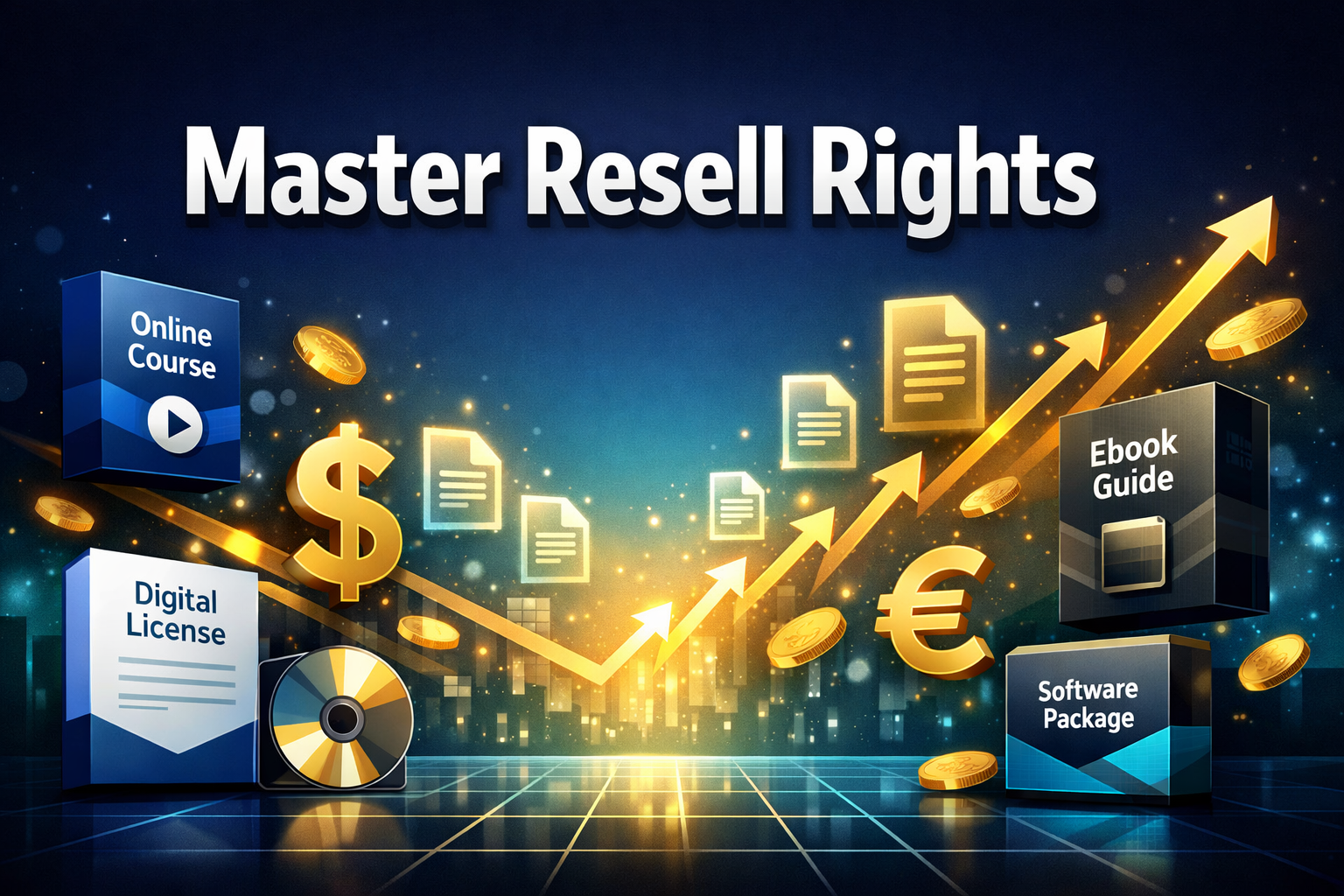
Imagine buying a digital product once — a course, an eBook, or a software tool — and then selling it to hundreds of customers, keeping 100% of the profits every single time. That is the core promise of master resell rights, and in 2026, it has become one of the most talked-about strategies in the digital product economy. But before diving in, it is essential to understand exactly what these rights mean, how they work legally, and whether they are the right fit for a business model.
Key Takeaways 📌
- Master resell rights (MRR) allow buyers to resell a digital product and pass on reselling rights to their customers.
- MRR is not the same as private label rights (PLR) or standard resell rights — each has different permissions.
- Always read the license agreement carefully before purchasing or selling any MRR product.
- MRR can generate passive income streams, but success depends on marketing, audience, and product quality.
- Ethical use of MRR products protects both the seller’s reputation and the end customer’s trust.
What Are Master Resell Rights?
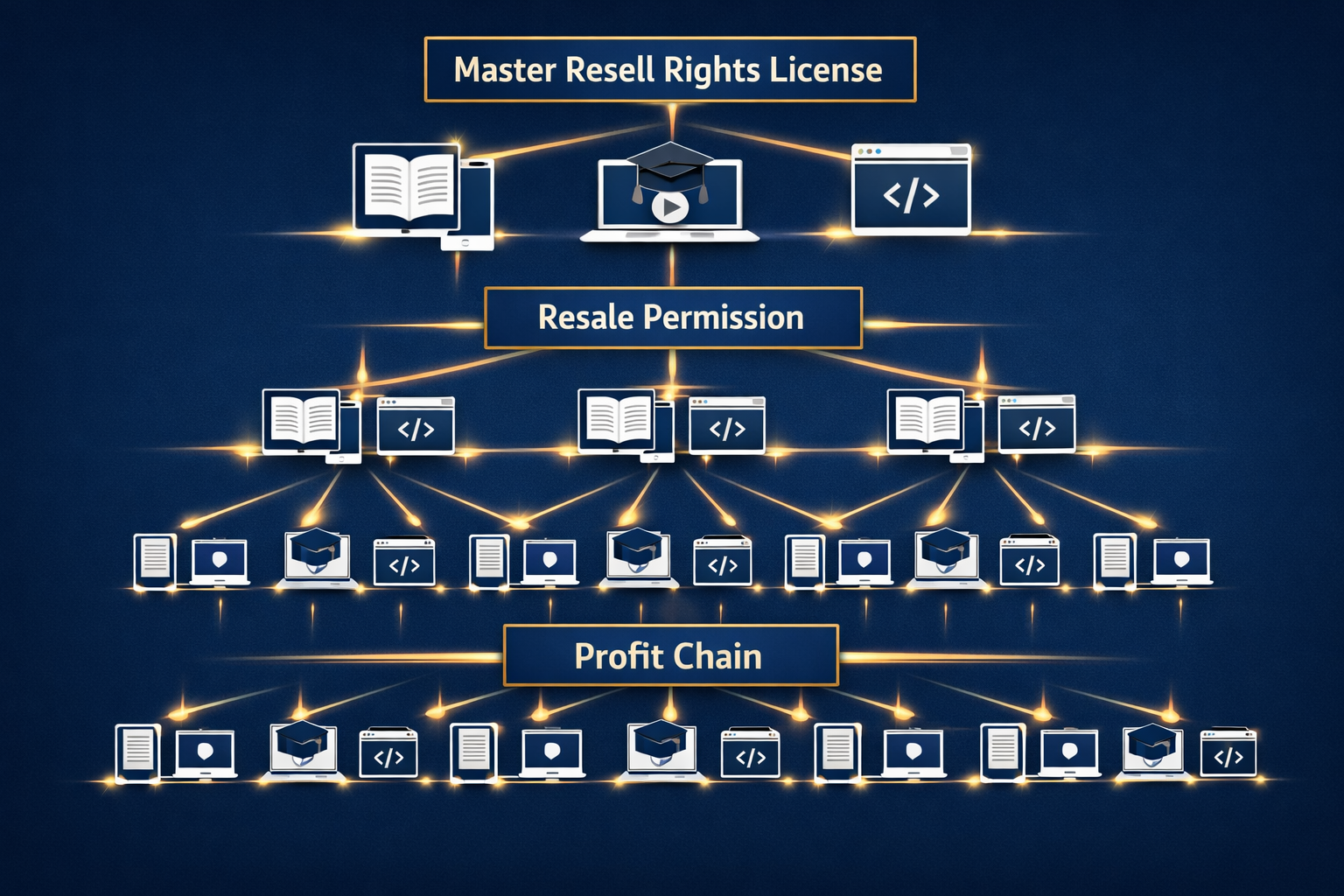
Master resell rights are a type of digital product license that grants the buyer two key permissions:
- ✅ The right to sell the product to others and keep the profits.
- ✅ The right to pass on resell rights to those buyers, so they can also sell it.
This creates a chain of resellers, all working from the same original product. The original creator sells the product once (or many times), and every buyer downstream can do the same.
💬 “Master resell rights flip the traditional licensing model — instead of restricting distribution, they incentivize it.”
How MRR Differs from Other License Types
Understanding the differences between license types is critical before purchasing any digital product.
| License Type | Can Resell? | Can Pass Resell Rights? | Can Edit Content? |
|---|---|---|---|
| Standard Resell Rights | ✅ Yes | ❌ No | ❌ No |
| Master Resell Rights | ✅ Yes | ✅ Yes | ❌ Usually No |
| Private Label Rights (PLR) | ✅ Yes | ✅ Often | ✅ Yes |
| Personal Use Only | ❌ No | ❌ No | ❌ No |
The key distinction with master resell rights is that second-tier permission — the ability to sell the rights themselves, not just the product.
What Products Typically Come with MRR?
Master resell rights are most commonly attached to:
- 📘 eBooks and guides
- 🎓 Online courses and video training
- 🛠️ Software and plugins
- 📊 Templates and toolkits
- 🎧 Audio programs and podcasts
How Master Resell Rights Work in Practice
The business model behind master resell rights is straightforward, but execution matters enormously.
Step-by-Step: The MRR Business Flow
Step 1 — Find a quality MRR product. Search reputable marketplaces or sellers who specialize in digital licenses. Look for products with clear, written license agreements.
Step 2 — Review the license terms. Not all MRR licenses are equal. Some restrict the minimum selling price, prohibit giving the product away for free, or limit which platforms can be used for sales.
Step 3 — Set up a sales funnel. Create a landing page, write compelling copy, and build an email list. The product itself rarely sells without marketing effort.
Step 4 — Sell the product and the rights. Offer buyers the option to purchase the product alone, or the product plus the master resell rights at a higher price point.
Step 5 — Collect revenue and scale. Reinvest profits into paid advertising, content marketing, or purchasing additional MRR products to expand the catalog.
Common Pricing Strategies for MRR Products
| Strategy | Description | Best For |
|---|---|---|
| Flat fee | One price for product + rights | Simple funnels, beginners |
| Tiered pricing | Product only vs. product + MRR | Maximizing revenue per customer |
| Bundle pricing | Multiple MRR products together | Higher perceived value |
| Upsell model | Sell product first, offer MRR as upsell | Email list monetization |
The Legal Side of Master Resell Rights
This is where many sellers make costly mistakes. Master resell rights are a contractual license, not a copyright transfer. The original creator retains copyright ownership. The buyer receives only the specific permissions outlined in the license document.
Key legal points to keep in mind:
- 📄 Always get the license in writing. Verbal agreements are unenforceable.
- 🚫 Do not modify the product unless the license explicitly allows it.
- 💰 Respect minimum price clauses. Many MRR licenses set a floor price to protect market value.
- 🌐 Check platform restrictions. Some licenses prohibit selling on certain marketplaces.
⚠️ Selling an MRR product outside of its license terms can expose a seller to copyright infringement claims — even if the product was purchased legitimately.
Master Resell Rights vs. PLR: Which Is Better?
This is one of the most common questions in the digital product space, and the answer depends entirely on the business goal.
Choose Master Resell Rights If:
- The goal is to resell a polished, ready-made product without editing it.
- Building a passive income stream from a proven product is the priority.
- There is no interest in content creation or customization.
Choose PLR If:
- The goal is to rebrand and customize content as original material.
- Building a personal brand with unique content is important.
- Flexibility to modify, rewrite, or repurpose the product is needed.
Both models have merit. Many experienced digital marketers use both simultaneously — PLR for brand-building content and MRR for direct product sales.
Pros and Cons of Master Resell Rights
✅ Advantages
- Low startup cost compared to creating original products
- Immediate inventory — no production time required
- Scalable — sell the same product unlimited times (per license terms)
- Passive income potential once marketing systems are in place
- Flexibility to sell across multiple channels
❌ Disadvantages
- Market saturation — many sellers may offer the same product
- No creative control — cannot modify the product (in most cases)
- Quality risk — not all MRR products are high quality
- Reputation risk — selling a poor product damages brand trust
- License complexity — terms vary widely and require careful reading
Tips for Succeeding with Master Resell Rights in 2026
The digital product market is more competitive than ever. Standing out requires more than just listing a product for sale.
1. Prioritize quality over quantity. One exceptional MRR product with strong marketing outperforms ten mediocre ones with none.
2. Build an email list. Email remains the highest-converting channel for digital product sales. Every buyer should enter a nurture sequence.
3. Add genuine value. Offer bonuses, tutorials, or support that competitors do not. This differentiates the offer even when the core product is identical.
4. Be transparent with buyers. Clearly disclose that the product comes with master resell rights. Customers appreciate honesty, and it builds long-term trust.
5. Vet every license carefully. Before purchasing any MRR product, verify the seller’s legitimacy and read every clause of the license agreement.
Conclusion: Is Master Resell Rights Right for You?
Master resell rights offer a legitimate and potentially lucrative path into the digital product economy — but they are not a guaranteed shortcut to wealth. Success depends on choosing quality products, understanding the legal terms, and applying consistent marketing effort.
Actionable Next Steps 🚀
- Research reputable MRR marketplaces and review their license standards before purchasing.
- Download and read at least three MRR license agreements to understand common terms and restrictions.
- Define a niche — selling MRR products to a specific audience dramatically improves conversion rates.
- Build a simple sales funnel using a landing page and email opt-in before spending on advertising.
- Start small — purchase one high-quality MRR product, master the sales process, then scale.
The opportunity is real. The key is approaching master resell rights with the same professionalism and due diligence applied to any serious business venture.
References
- Fishman, S. (2020). The Copyright Handbook: What Every Writer Needs to Know. Nolo Press.
- Lowe, D. (2019). Intellectual Property for Dummies. Wiley Publishing.
- U.S. Copyright Office. (2023). Copyright Basics (Circular 1). Library of Congress. https://www.copyright.gov/circs/circ01.pdf
- World Intellectual Property Organization. (2022). Understanding Copyright and Related Rights. WIPO Publication No. 909(E). https://www.wipo.int/edocs/pubdocs/en/wipo_pub_909.pdf